Authenticating a Cuban cigar doesn't take rocket science nor a 20 year factory worker to determine. Right off, there is 1 thing that stands out immediately and this is the very unique aroma that can only come from Cuba's unique tobaccos. Sometimes it may be difficult to "open air" smell the difference, so place a few Cuban cigars in a Ziplock bag for a day or two and at the same time do the same for a few Regional cigars in a separate Ziplock bag and then take a smell. There is no denying the difference assuming one's sense of smell is functioning properly. The Cuban has a very unique perfume type aroma while the Regional cigar smells the same as it did when placed in the bag not having any distinctive aromatic qualities. I'm not picking on Regional cigars at all, just making a factual statement. Now we'll go down the mechanical road that most folks will take to add assurance that they have authentic Cuban cigars. This is how I do it.
Fortunately for me, I have a trusted family type source and I know his sources and have so for a very long time. We have essentially become a family and perhaps the most rewarding aspect of acquiring my cigars is knowing that the money is not going to some middle man shark, but rather to families that need the money and appreciate me for doing what I can to help. This is perhaps why my nephew Brian has become involved dragging me along selling cigars to those we know and trust to further help our great friends in Cuba and of course, put some huge smiles on my fellow Americans that can get cigars at pre-SA prices.
Alrighty then, let's authenticate a box of cigars I'm getting ready to buy from a friend's friend that got them from his friend in England. Some folks right off the top would step back and say to hell with this, these things have been everywhere, who knows where they are really from. Well, that's an expected reaction, but the truth is, getting a forbidden fruit where is doesn't belong can involve a gauntlet of steps. This is why I never ask "where did you get these" because you are forcing someone to lie. They don't want to scare you off giving you these details. If they want to provide this at will great, but no matter what the story or lack thereof, you're going to do your own detective work to ensure you are getting the real deal. So here we go.
What's being offered is a:
Factory sealed box of Montecristo No. 2
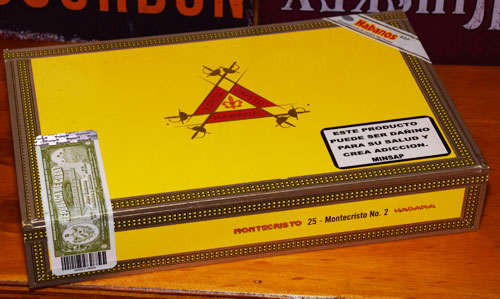
So here's a factory sealed box of Cuba's world famous Montecristo No.2's. First thing I do (after celebrating) is check out the font, writing and logo. The ends (as shown below) should only have the word "Montecristo" and the back face side should be empty.
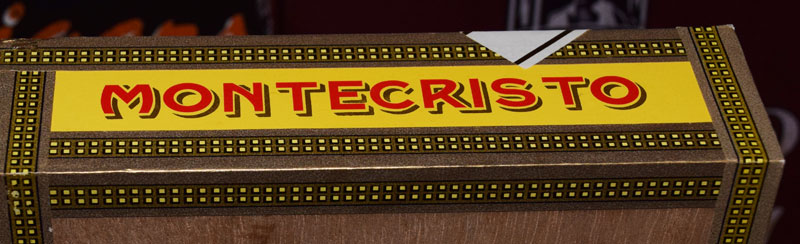
Both sides of the box should only have the word "Montecristo". Pay attention the the crisp yellow, brown and red coloring. In addition, pay attention the the double stacked yellow squares on the ribbon. I have seen ribbon with no squares before.
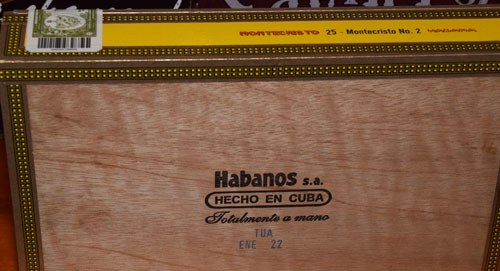
The back side may have several stamps and even a double stamped Habanos s.a. print if heading to the E.U. and some other countries. The blue ink stamp is what is called the "box code". Here, the top letters "TUA" represent the factory code where the cigars were manufactured. It is important to note that these codes do change. The bottom blue ink stamp represents the month and year the cigars were boxed (not made). Now back to the factory code. I must add that a few new codes have been added as well and I have only been able to decipher just a few of the new codes, including El Laguito (LOME), Partagas (OSU), José Martí (ECA, which is unchanged from the previous cigar box code) and Romeo y Julieta (PEL). Cracking those codes is not very difficult assuming you can visit Casa De Habanos in Havana. On this box the factory code "TUA" represents the Partagas factory in Havana where Monte 2's have been produced and boxed for decades. There are a few factory charts out there but I haven't found one past 2004. I am currently working o n one myself and will post it as soon as I complete it.
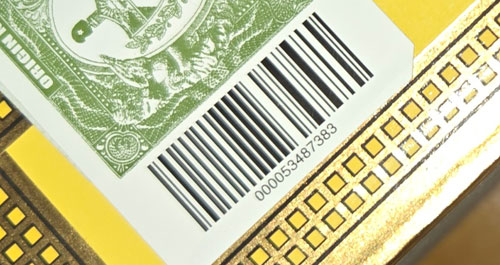
No we move on to the Cuban State seal located on the left side of the box with the serial number at the very bottom and the Cuban Coat Of Arms just above it. There should be 12 numbers with this current State seal. Write this number down on a piece of paper for reference. These serial numbers have another location as shown below.
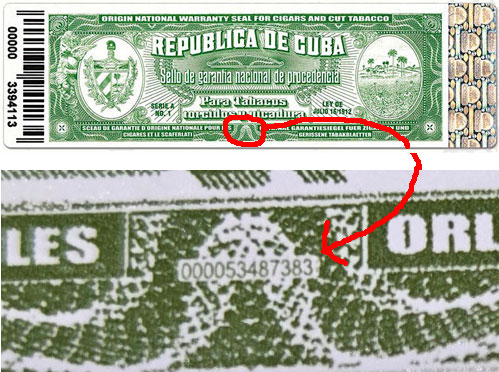
And here's the "micro-serial" not many are aware of. It's located center bottom and requires a strong magnifying glass to read it. If this is not present or indicates a different number, time to walk away.
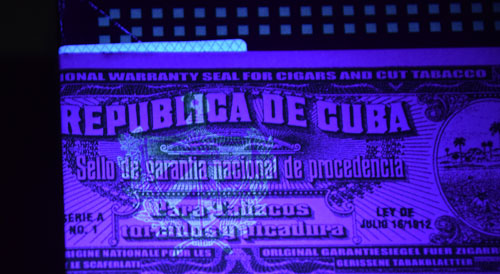
Then and finally, you have the Cuban Coat Of Arms holographic image centered in the "I" of the word Republica. Shine your blacklight/holographic light into the seal and you should see the Coat Of Arms appear. If this is not present, walk away.Sample text. Click to select the Text Element.
The Smell Test
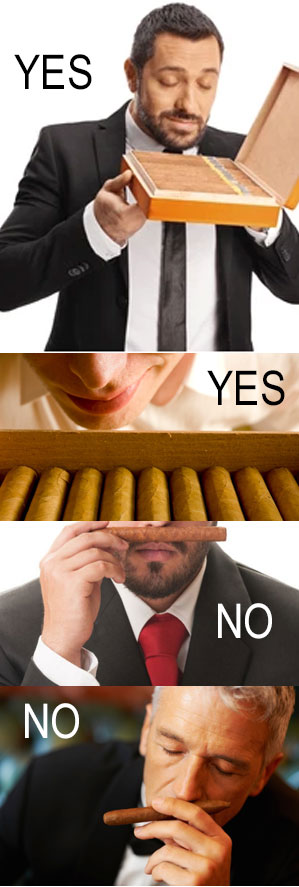
Ah, the smell test. The unmistakable that should never be mistaken. Cuban cigars are separated from RC's by many factors, but perhaps the biggest difference and easiest to tell, is the undeniable smell we each describe in our own way. For me, it reminds me of my grandmothers bathroom. She and my grandfather lived in a beautiful redwood home on a lake in Oregon and there were many beautiful natural scents in and outside of the home. The smell of her perfume was a rich floral scent that resided in a very old bottle with a squeeze bulb. Now that scent resides in my humidor that reminds every time I step inside of my Grandmother and that wonderful house on the lake. Okay and moving on. Even though this undeniable aroma indicates Cuban tobacco, it can be Cuban tobacco from Pablo's backyard. Probably not, but it is a possibility.